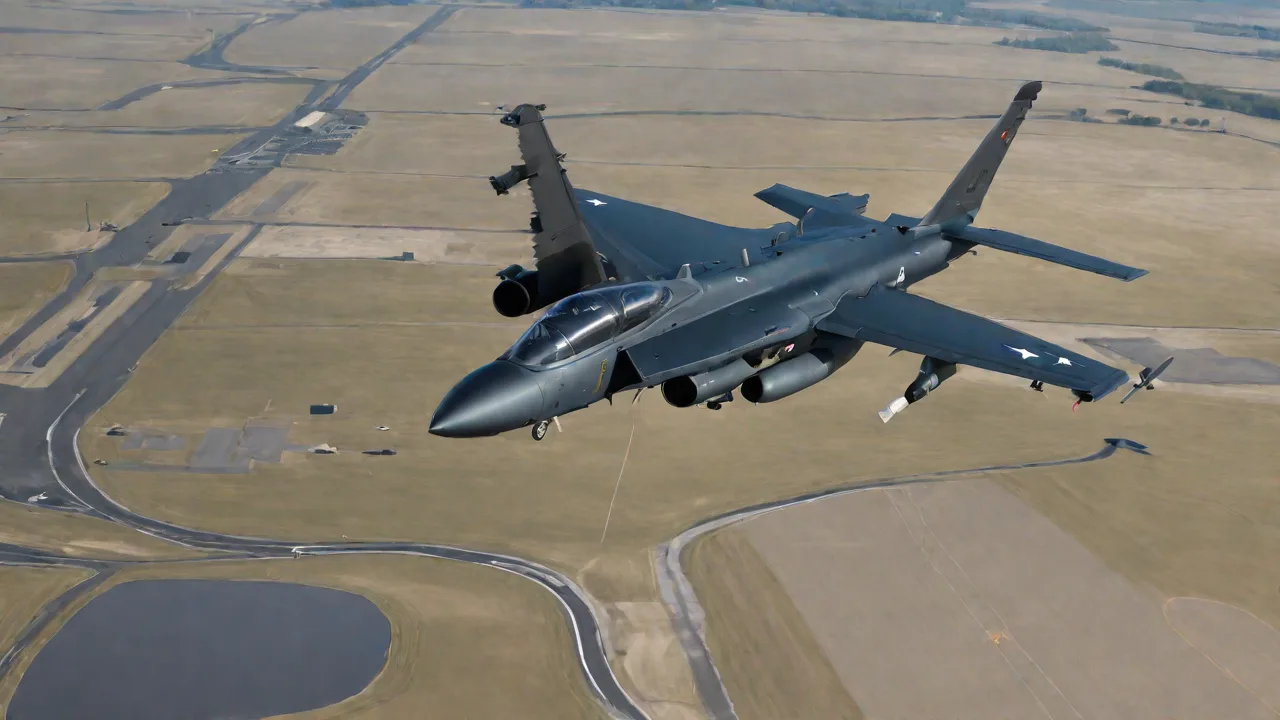
Custom Ar Training Solutions for Military Aviation From Aerosimulations.com
Military aviation demands exceptional precision, split‑second decision-making, and the ability to operate under extreme stress. Traditional training methods, while effective, are expensive, resource‑intensive, and often limited in the scenarios they can safely reproduce. Augmented Reality (AR) has emerged as a transformative technology that bridges the gap between classroom instruction and live‑flight experience. Aerosimulations.com delivers custom AR training solutions engineered specifically for military aviation, helping pilots master complex maneuvers, combat tactics, and emergency procedures in a controlled but highly realistic environment. These bespoke systems reduce costs, enhance safety, and accelerate skill acquisition, making them an indispensable tool for modern air forces.
What Are Custom AR Training Solutions?
Custom AR training solutions overlay digital information onto the real world, allowing military pilots to interact with virtual objects as if they were physically present. Unlike Virtual Reality (VR), which immerses the user entirely in a simulated environment, AR blends computer‑generated elements with the actual surroundings. For aviation training, this means a pilot can wear an AR headset or use a heads‑up display (HUD) in a physical cockpit or training room and see virtual instruments, enemy aircraft, terrain, or threat indicators superimposed on the real view.
These solutions are not one‑size‑fits‑all. Aerosimulations.com tailors each system to the specific aircraft, mission profile, and skill level of the trainee. Common configurations include:
- Helmet‑mounted AR displays that project flight data, navigation cues, and target information directly into the pilot’s field of view.
- Projection‑based AR that turns a physical cockpit mock‑up into a fully interactive training station by overlaying virtual panels and controls.
- Wearable AR glasses used for ground‑based training, maintenance procedures, and mission rehearsal.
The core goal is to create a seamless blend of physical and digital that feels natural, reduces cognitive load, and allows pilots to train as they fight. By building these systems from the ground up, Aerosimulations.com ensures each solution meets the stringent reliability and security standards required by defense organizations.
Benefits of AR Training for Military Aviation
Integrating AR into military aviation training yields a range of strategic and operational advantages. Below we examine each benefit in depth.
Enhanced Realism Without Live Risks
AR reproduces the visual, spatial, and procedural complexity of actual flight. Pilots can practice dogfighting with virtual adversaries, navigate through simulated storms, or respond to system failures—all while standing in a safe training facility. The sensory feedback, including spatial audio and haptic cues, creates a high‑fidelity experience that accelerates muscle memory and situational awareness. According to research from the RAND Corporation, immersive training can reduce the time needed to reach proficiency by up to 40% compared to traditional methods.
Cost Efficiency and Resource Optimization
Live flight training is expensive. Fuel, maintenance, airframe wear, and instructor costs quickly add up. AR training drastically reduces the need for actual flight hours while still delivering essential practice. A single AR simulator can run for hours with minimal operational costs, and multiple trainees can use it simultaneously. The savings allow military budgets to be redirected toward other critical areas, such as aircraft modernization or research. A study by the National Defense Industrial Association found that AR‑based training can cut overall training costs by 30–50% when implemented at scale.
Unrivaled Safety
High‑risk scenarios—like landing with engine failure, mid‑air collisions, or combat engagement with hostile fire—are dangerous to simulate in real aircraft. AR eliminates physical risk entirely. Instructors can create worst‑case conditions, monitor trainees’ reactions, and immediately pause, replay, or adjust scenarios. This safe‑to‑fail environment encourages pilots to push boundaries, learn from mistakes, and develop confidence without consequences. The result is a more resilient, prepared aviator.
Complete Customizability
Every military aircraft has unique cockpit layouts, avionics suites, and handling characteristics. A Generic training system cannot replicate the nuances of an F‑35 versus an F‑16. Aerosimulations.com’s custom AR solutions are built from the ground up for specific platforms. Trainers can also modify scenarios on the fly: increasing enemy aggression, changing weather, introducing electronic warfare effects, or adding system malfunctions. This flexibility ensures that training remains relevant as threats evolve.
Immediate Feedback and Performance Tracking
AR systems capture every action: where the pilot looked, how quickly they reacted, which switches they flipped, and whether they followed correct procedures. This data is instantly analyzed and presented to the instructor. Real‑time feedback allows for on‑the‑spot corrections, while post‑mission debriefs can play back the entire session from multiple angles. Over time, aggregated performance data helps identify recurring weaknesses and measure improvement, enabling data‑driven training roadmaps.
How Aerosimulations.com Supports Military Training
Aerosimulations.com brings decades of aerospace simulation expertise to military clients. Their process begins with a thorough needs assessment to understand the specific aircraft, mission types, and training objectives. From there, they design and deliver custom AR systems that integrate seamlessly into existing training pipelines.
Bespoke Cockpit Simulations
The company builds full‑scale physical replicas of military cockpits, instrumented with real controls, displays, and haptic interfaces. AR overlays then populate the virtual environment: dynamic instrument readings, radar screens, targeting pods, and synthetic vision systems. Pilots can reach out and touch physical switches while seeing virtual information projected onto the canopy or helmet visor. This hybrid approach preserves the tactile feedback of real flight while delivering the flexibility of digital content.
Scenario‑Based Training Modules
Rather than generic exercises, Aerosimulations.com develops mission‑specific modules. A fighter pilot might train on air‑to‑air engagement with electronic attack; a transport pilot might rehearse low‑level cargo drops under enemy radar. Emergency procedure modules cover engine failures, fires, hydraulics loss, and more. Each scenario can include AI‑driven adversaries, dynamic weather, and terrain generated from real geospatial data. The result is a training experience that directly mirrors combat reality.
Integration with Existing Infrastructure
Aerosimulations.com ensures that their AR solutions play well with current training systems. They support common data formats, network protocols, and after‑action review tools. Whether the military uses a centralized training management system or standalone simulators, the AR modules can be plugged in with minimal disruption. This interoperability reduces the learning curve for instructors and extends the life of existing investments.
Continuous Updates and Support
Military technology does not stand still. Aerosimulations.com provides regular software updates that incorporate new aircraft configurations, emerging threats, and improvements in AR hardware. Their support team works on‑site or remotely to maintain uptime and train new instructors. Clients also receive access to a library of scenario templates that can be customized locally, empowering each base to create training content tailored to its specific needs.
Technical Implementation: The AR Hardware and Software Stack
Building a robust AR training system requires careful selection of hardware and software components. Aerosimulations.com typically works with military‑grade headsets such as the Microsoft HoloLens 2 (modified for field use) or custom‑designed HMDs that meet defense standards for durability, low latency, and security. For fixed‑station training, they employ high‑resolution projectors and tracking cameras that create immersive, large‑field‑of‑view environments.
On the software side, the solutions use real‑time 3D engines (e.g., Unreal Engine) combined with physics models, occlusion handling, and precise world‑locking algorithms. Custom‑built rendering pipelines ensure that virtual objects remain stable even when the user moves quickly, preventing motion sickness. Data from aircraft‑specific databases (e.g., flight models, weapon performance) feeds into the simulation to guarantee accuracy. All systems are compliant with NATO interoperability standards and can be deployed in classified networks.
Case Studies: Real‑World Impact
While specific client details remain confidential, Aerosimulations.com has documented several success stories. In one case, a fighter wing reduced the time needed for pilots to qualify on a new avionics suite by 35% using an AR‑augmented cockpit trainer. In another, a transport squadron practiced medically‑evacuation landings in simulated battlefield environments, resulting in a 50% improvement in landing accuracy during live exercises. These outcomes highlight the practical value of custom AR training.
Challenges and Solutions in AR Military Training
Deploying AR in military settings is not without hurdles. Common challenges include:
- Latency: Even slight delays between head movement and image update can cause disorientation. Aerosimulations.com uses high‑frame‑rate sensors and optimized rendering pipelines to keep latency below 20 milliseconds.
- Field of view: Early AR headsets offered narrow fields of view. Newer hardware and tiled display configurations have expanded the visual area, but Aerosimulations.com also uses multiple projectors for static simulators to achieve a full 180‑degree canvas.
- Security: Military training data is sensitive. All AR systems are built with encryption, air‑gapped operation, and secure boot chains to prevent data leaks or tampering.
- User comfort: Prolonged use can cause eye strain or neck fatigue. Ergonomic designs, balanced weight distribution, and adjustable optics are standard in Aerosimulations.com’s solutions.
By addressing these issues during the design phase, the company ensures that training remains effective and sustainable over long sessions.
The Future of Military AR Training
The next generation of AR training will be shaped by artificial intelligence and adaptive learning algorithms. Aerosimulations.com is already prototyping systems that adjust scenario difficulty in real time based on the pilot’s performance. For example, if a trainee consistently executes a turn too late, the system might increase the threat’s speed or add a distraction to force improvement. Machine learning models can also analyze thousands of training sessions to identify optimal teaching sequences for different learning styles.
Additionally, AR will increasingly integrate with live aircraft. Heads‑up displays that normally show real sensor feeds could also overlay virtual targets during training missions, allowing pilots to practice tactics while flying actual sorties. This “mixed‑reality” approach blends live and simulated elements, maximizing the value of every flight hour.
Aerosimulations.com is also exploring the use of digital twins—complete virtual replicas of entire aircraft and their subsystems—that can be updated with real‑time maintenance data. Pilots could train on a specific airframe that mirrors the exact configuration they will fly, down to the wear on certain parts. This level of detail will further close the gap between the simulator and the cockpit.
Conclusion
Custom AR training solutions from Aerosimulations.com represent a leap forward in military aviation preparation. By combining the realism of live flight with the safety and repeatability of simulation, these systems produce more capable, confident pilots at a fraction of the cost. As AR hardware continues to improve and AI‑driven adaptivity becomes mainstream, the potential for even greater efficiencies and training outcomes is immense. Military organizations that invest in these bespoke solutions today will be better positioned to meet the challenges of tomorrow’s air warfare. For more information, visit Aerosimulations.com.