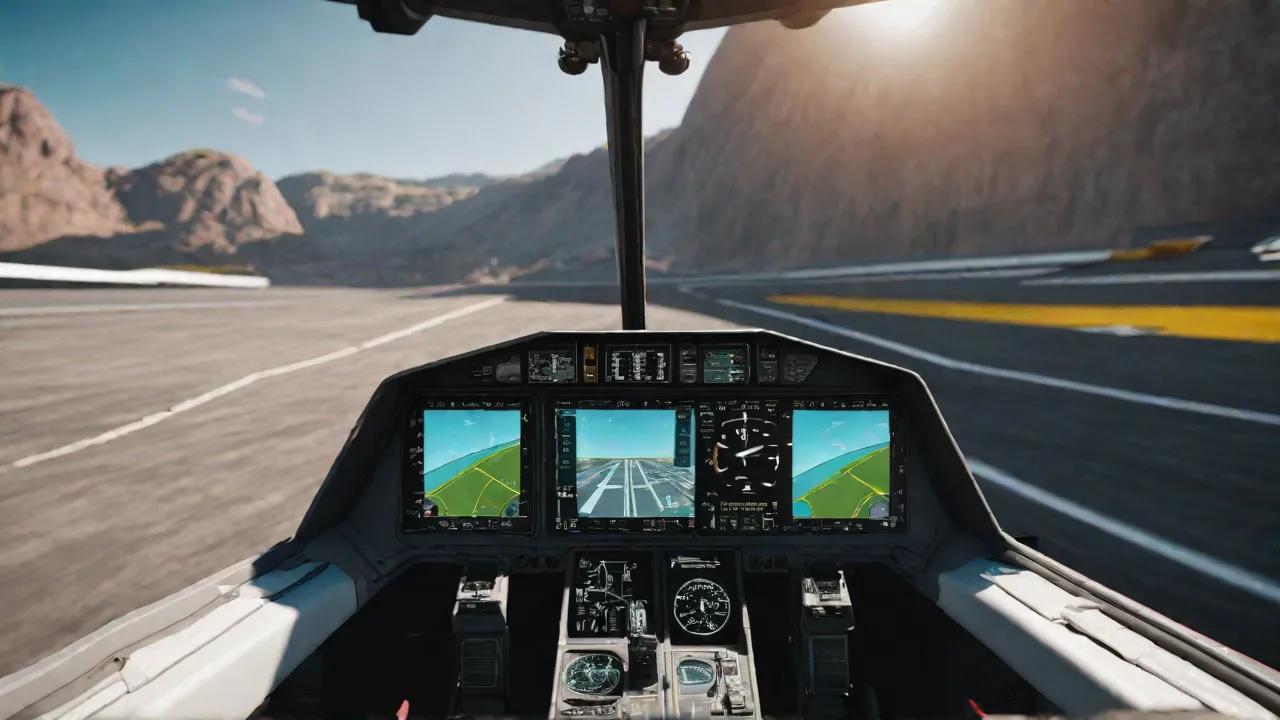
Designing Realistic Ar Cockpit Environments for Pilot Practice
Introduction: The New Frontier in Pilot Training
Pilot training has long relied on a mix of classroom theory, simulator sessions, and actual flight hours. But as aircraft systems grow more complex and the demand for skilled pilots increases, traditional methods are being stretched thin. Augmented reality (AR) offers a compelling solution by overlaying digital information onto the real world, creating interactive cockpit environments that feel authentic without requiring a physical aircraft. These AR environments allow trainees to practice procedures, handle emergencies, and build muscle memory in a safe, repeatable setting. This article explores the design principles, benefits, and future of realistic AR cockpit environments for pilot practice.
Understanding Augmented Reality in Aviation Training
Augmented reality differs from virtual reality (VR) in that it enhances the real world rather than replacing it. In an AR cockpit, the trainee sees physical elements—such as their hands, a mock-up panel, or the actual cockpit—combined with virtual instruments, warnings, and external views. This hybrid approach reduces disorientation and allows for natural interaction with switches and buttons while still providing the flexibility to simulate any scenario.
AR systems for pilot training typically fall into two categories:
- Head-mounted displays (HMDs): Devices like Microsoft HoloLens or Magic Leap overlay holographic instruments directly into the user’s field of view.
- Projection-based AR: Projectors cast interactive images onto physical surfaces, such as a simple panel mock-up, turning it into a functional instrument cluster.
Both approaches share the goal of creating a convincing, responsive training environment that can be quickly reconfigured for different aircraft types or scenarios.
Key Design Principles for Realistic AR Cockpits
Designing an effective AR cockpit environment requires careful attention to visual fidelity, interactivity, and user experience. The following principles are critical for success.
High-Fidelity 3D Models and Textures
The virtual instruments and controls must closely match the look and feel of the actual aircraft. This means using high-quality 3D models with accurate dimensions, colors, and surface textures. Instruments should display realistic needle movements, digital readouts, and response times. If a trainee reaches for a virtual knob, it must be in the expected location and provide tactile feedback (via haptics or physical attachments) to reinforce proper procedure.
Leading AR development platforms, such as Unity’s AR Foundation and Unreal Engine’s AR tools, enable creators to build photorealistic cockpit components that run on modern AR hardware. These tools support advanced lighting and occlusion, making virtual objects appear solid within the physical cockpit.
Real-Time Data Integration
To simulate realistic flight dynamics, AR cockpits must ingest real-time data streams. This includes telemetry from flight dynamics models, weather updates, air traffic control communications, and aircraft system simulations. For example, when a pilot adjusts the throttle in an AR environment, the engine parameters should update immediately, and the external view (if part of the simulation) should respond accordingly. Integrating open standards such as ARINC 429 or using simulation frameworks like FlightGear can streamline this data flow.
User Interface and Minimal Distraction
One of the biggest risks in AR training is visual clutter. Pilots must focus on the task without being overwhelmed by unnecessary graphics. Designers should follow aviation’s classic “dark cockpit” philosophy: only highlight instruments when they require attention. Virtual overlays should be semi-transparent or context-aware, disappearing during critical maneuvers. Gesture controls must be simple and reliable—for instance, a pinch to adjust a radio frequency or a swipe to dismiss a warning. Haptic feedback (vibration in a glove or headset) can confirm actions without requiring the pilot to look away from the scene.
Physical Ergonomics and Spatial Anchoring
An AR cockpit environment is only as good as its alignment with the physical world. Virtual instruments must be anchored precisely to the real cockpit or mock-up. If the trainee moves their head, the virtual gauges should stay fixed in space. This requires robust spatial mapping and tracking. Many commercial AR headsets now include built-in sensors that map the room and maintain world-locked holograms. For fixed-base training devices, simple marker-based tracking can achieve similar stability at lower cost.
Benefits of AR Cockpit Environments for Pilot Practice
The shift toward AR in pilot training is driven by tangible advantages that go beyond novelty.
- Cost-Effectiveness: Flight hours are expensive, with fuel, maintenance, and instructor time adding up quickly. AR cockpits can be used for hundreds of hours without burning a single gallon of jet fuel. Even high-end full-flight simulators cost millions to maintain, while AR systems can be deployed for a fraction of that price.
- Safety Without Risk: In an AR environment, trainees can practice engine failures, system fires, or emergency landings as often as needed. No real aircraft is endangered, and mistakes become learning opportunities rather than safety incidents.
- Customizable and Scalable: Instructors can quickly change the aircraft type, weather conditions, or system malfunctions with a few clicks. This flexibility allows schools to offer training for multiple aircraft types without purchasing separate physical trainers.
- Immediate Performance Feedback: AR systems can record every interaction and compare it against standard procedures. Trainees receive real-time cues—such as a highlight on the correct switch—and post-session analytics that pinpoint areas for improvement.
- Reduced Instructor Workload: While an instructor still oversees training, AR can handle many routine briefings and demonstrations. Automated scenario management lets the instructor focus on mentoring rather than manually adjusting instruments.
Challenges in Designing Realistic AR Cockpits
Despite these benefits, creating a realistic AR cockpit environment presents several technical and practical challenges.
Hardware Limitations
Current AR headsets have limited field of view (typically 40–60 degrees in consumer models) and resolution that may not render small text on instrument labels clearly. High-luminance environments (bright flight decks) can wash out projected images. Battery life and weight also affect comfort during longer training sessions. However, enterprise-grade headsets like the HoloLens 2 and upcoming devices are rapidly improving in these areas.
Latency and Registration
Any delay between head movement and the corresponding update of virtual objects (latency) can cause motion sickness and break immersion. Similarly, if the virtual instruments drift even a few millimeters from their intended position, the trainee’s muscle memory may be incorrectly trained. Solutions include using high-frequency tracking cameras, predictive algorithms, and optimized rendering pipelines that maintain frame rates above 90 fps.
Integration with Existing Training Programs
Many airline and flight school training syllabi are rigidly defined by regulatory bodies (e.g., FAA, EASA). Integrating AR as a credited training device requires validation that the system meets specific standards for fidelity and performance. While some regulatory acceptance is growing for “augmented reality training devices” (ARTDs), full approval is still pending for many use cases. Developers must document validation evidence and work with certification bodies to gain acceptance.
Cost of Content Development
Creating high-quality 3D models, interactive scenarios, and real-time data interfaces is labor-intensive. A single AR cockpit environment can take months to develop. However, reusability and modular design—creating a library of instrument panels, aircraft systems, and weather models—can amortize that cost across many training programs.
Future Directions: What’s Next for AR Cockpits
The next generation of AR cockpit environments will push the boundaries of realism and interactivity.
AI-Driven Adaptive Training
Artificial intelligence can analyze a trainee’s performance in real time and adjust the difficulty or introduce unexpected failures. For example, if a pilot consistently forgets to set flaps before takeoff, the system might insert an extra warning or modify the scenario to emphasize that step. AI also enables natural language interactions with virtual air traffic control or copilot roles.
Full-Motion Haptic Feedback
While current AR focuses on visual and auditory cues, adding haptic feedback to seats, controls, and even gloves can simulate vibration, turbulence, and control forces. Companies like Tactical Haptics are developing arrays of actuators that provide directional skin stretch, giving a realistic sense of control loading.
Enhanced Visual Fidelity and Mixed Reality Cockpits
Future AR glasses with higher resolution, wider field of view, and advanced eye-tracking will allow instructors to see exactly where a pilot is looking. Eye gaze data can be used to assess scan patterns and identify areas of inattention. Combined with improved occlusion and lighting matching, virtual instruments will become nearly indistinguishable from real ones.
Cloud-Based Scenario Libraries
Just as flight simulators allow swapping aircraft models, cloud platforms can host thousands of scenarios—from routine departures to rare emergencies. Trainees anywhere in the world can access the same training environment, enabling standardization across schools and airlines.
Case Studies: AR in Action
Several organizations are already pioneering AR cockpit training. CAE, a leading aviation training provider, has demonstrated a mixed-reality system that combines a physical mock-up with AR overlay for procedural training. Airbus has used HoloLens to help pilots practice door operations and emergency equipment use. NASA has explored AR for astronaut training in spacecraft cockpits, where physical mock-ups are expensive to build. These examples show that AR is transitioning from a proof-of-concept to an operational tool.
Conclusion: AR Cockpit Environments as a Training Staple
Designing realistic AR cockpit environments is transforming pilot training by offering a balance of immersion, flexibility, and cost efficiency that traditional methods cannot match. While challenges remain in hardware, certification, and content creation, rapid advances in AR technology and industry adoption suggest that these environments will soon become standard supplementary training devices for pilots at all levels. For flight schools, airlines, and individual pilots, investing in AR now means gaining a competitive edge through safer, more effective practice.
As the technology matures, the line between virtual and real will blur further, making comprehensive pilot training more accessible and ultimately contributing to a safer global aviation system.